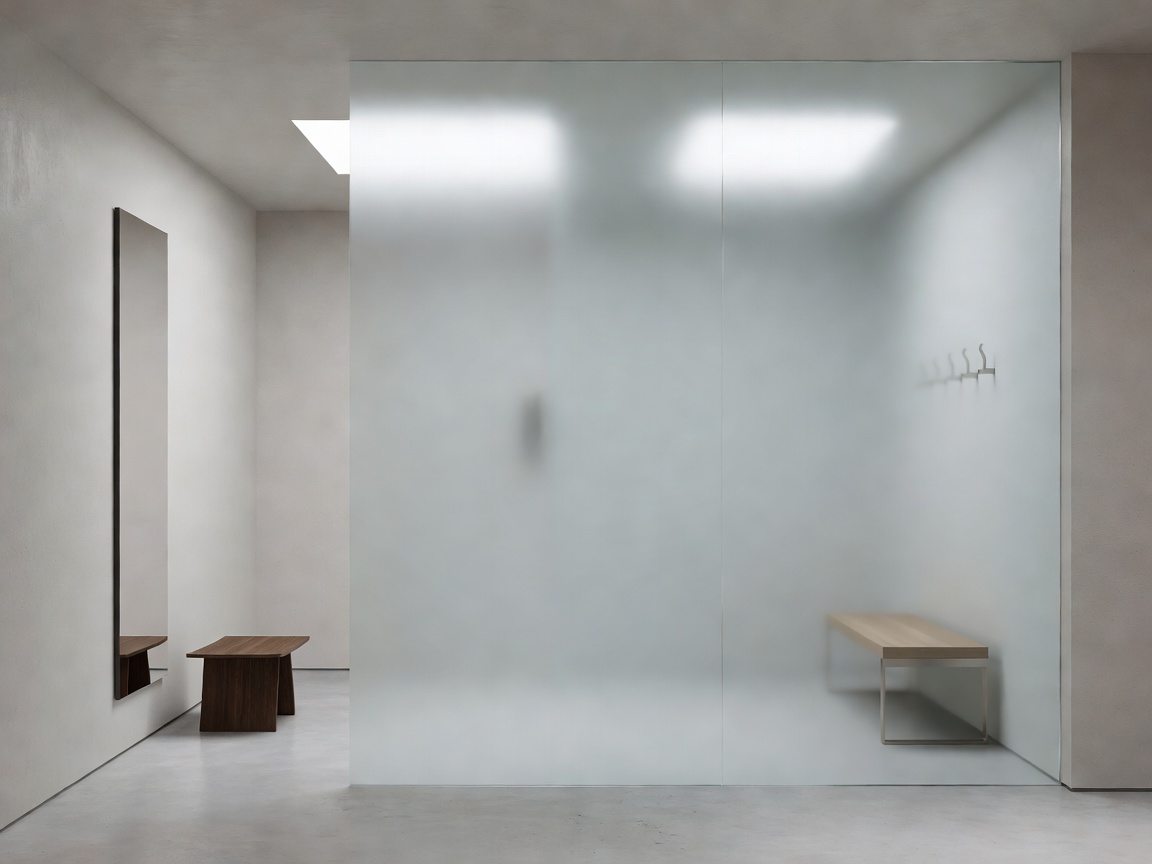
Map sight lines first
Stand at the entry, locker face, seating area and shower transition. Record what is visible from each position. Visual privacy can be created with room orientation, screens, partial walls, cubicles or changes in approach. A solution should not simply hide one area while exposing another.
Cubicles and screening
Individual cubicles offer a clear private action, while screened zones can support more flexible movement. Cubicles need careful door, hook, bench and cleaning access planning. Screens need stable alignment, cleanable edges and enough separation to avoid accidental sight lines. Review how staff reach the space without compromising the intended privacy.
Shower transitions
Wet-area movement often crosses the changing route. Use material changes, screening and clear zoning to make that transition understandable. Avoid placing dry seating directly in a splash path. Review drainage, ventilation and specialist wet-area details with qualified professionals. This guide does not replace design, building or facility advice.
Family and private changing areas
Family spaces can require different storage, turning space and supervision patterns from standard cubicles. Private changing areas may need a quieter route and clearer signage. Do not assume one arrangement serves every user. Gather operational requirements early and check local building, accessibility, fire and facility requirements with qualified professionals.
Comfort, access and cleaning
Privacy should not create narrow routes, difficult transfers or inaccessible controls. Review approach space, reach ranges and turning requirements against applicable local guidance. Select surfaces that tolerate frequent cleaning and inspectable joints. Screens with complex feet, channels or concealed cavities may create additional cleaning work. Keep maintenance access visible in the plan.
Good for
Mixed-use changing rooms, private treatment areas, family facilities, hotel wellness spaces and refurbishments where sight lines need improvement.
What to consider
- Review sight lines from every approach.
- Separate privacy decisions from decorative screening.
- Protect wet-to-dry transitions.
- Check access, turning and reach with qualified professionals.
- Specify cleanable, inspectable materials and joints.